

Most cross-border moving problems don’t happen on the road. They happen at the crossing, when something is missing. It might be an inventory list. It might be a declaration form. Sometimes there’s an item in the truck that isn’t allowed into the US at all.
People make this move for jobs in tech, healthcare and aerospace, for school, or to join a partner or family. Some move south for a few years and come back. This page explains moving from Surrey to Seattle the way a careful mover plans it: what paperwork you need, what can’t cross, which border crossing the truck uses, how long it takes and what it costs. It also covers the move back north, for anyone looking for Seattle to Surrey movers. Use it to plan, whoever you hire.
Planning a move to Washington State? Call (778) 962-1619. Tell us your move date, both addresses and your home size, and we’ll explain the paperwork and send a written quote.
First, Check That Your Mover Can Cross the Border
Not every moving company is allowed to move household goods into the United States. A Canadian company carrying goods into the US needs the right US registration and operating authority, and it must send CBP electronic details of the load before the truck arrives at the border. Many also work with a licensed customs broker.
Before you book any cross border movers Canada USA, ask:
- Are you authorized to carry household goods into the United States? Ask what registration or authority numbers they hold.
- Who handles customs clearance for my shipment? Will they use a customs broker, and is that fee included?
- How do you submit the shipment details to CBP before arrival?
- What’s your process if CBP inspects the truck?
- How are my belongings covered in the US?
A mover that does this route regularly will answer these questions quickly and clearly. If the answers are vague, keep looking.
Customs Clearance for Household Goods: What You Need
Customs clearance for household goods sounds complicated, but for most people it comes down to a few documents.
Documents for Moving Into the US
| Document | What it’s for |
| Passport, and visa or other immigration documents | Shows who you are and your right to live or work in the US |
| CBP Form 3299 | Declaration for free entry of unaccompanied household goods |
| Detailed inventory | A room-by-room list of what’s in the truck, with rough values |
| Lease, purchase agreement or job letter | Shows you’re setting up a home in the US |
| Vehicle documents (if you’re also bringing a car) | Needed for importing a vehicle |
Always check current requirements with CBP and your mover before moving day. Rules can change.
Duty-Free Entry for Used Household Goods
Under US rules, household furniture and personal effects can usually enter duty-free if you’ve owned and used them abroad for at least one year. They also can’t be for sale or for someone else. CBP may ask for proof of that use, so receipts or photos can help for newer or high-value items.
Newer items, things bought for resale, and some restricted goods may be treated differently. If you’re unsure about something specific, ask your mover or a customs broker before you pack it.
Making a Good Inventory
A clear inventory makes clearance smoother. List every box and piece of furniture by room. Note anything valuable or unusual. Number each box and write the number on the list. Your mover may help you prepare it, but you know your belongings best.
What Can’t Go on the Truck
Some items are restricted or banned at the US border. Others aren’t worth the trouble. Leave these out of the moving truck:
- Cannabis, in any form. It’s legal in BC and in Washington State, but taking it across the border is illegal in both directions.
- Firearms and ammunition. These have strict import rules and permits. Never pack them with your household goods without expert advice.
- Fresh food, plants and soil. Fruit, vegetables, meat, house plants, garden soil and firewood can be restricted for agricultural reasons.
- Alcohol beyond small amounts. Large collections of wine or spirits can attract duty and need extra paperwork.
- Fuel and propane. Movers can’t carry them. Drain mowers and disconnect barbecue tanks.
- Cash, important papers and valuables. Keep them with you.
Pets travel with you, not in the truck. Rules for bringing dogs into the US changed in 2024, so check the current CDC and USDA requirements well before your move.
The Border Crossing: Why the Truck Doesn’t Use the Peace Arch
Many people expect the truck to use the Peace Arch crossing on Highway 99. It can’t. A Peace Arch border crossing moving truck is turned away, because commercial vehicles aren’t allowed there.
Moving trucks use the Pacific Highway crossing, often called the truck crossing, about 1.6 km east on Highway 15 (176 Street) in Surrey. It connects to Blaine, Washington, and on to the I-5. Depending on the load and the day, a mover may use another commercial crossing in the Lower Mainland, such as Aldergrove–Lynden or Abbotsford–Sumas.
What Happens at the Border
- The shipment details are sent ahead. The mover or broker submits them to CBP before the truck arrives.
- The truck goes to the commercial lanes. Border officers check the documents.
- Inspection, if selected. CBP may open the truck. This can add time.
- Release. Once cleared, the truck continues south to Seattle.
Wait times at the truck crossing vary a lot by time of day and day of the week. A good mover plans the crossing for a quieter window when possible.
How Long Does a Move From Surrey to Seattle Take?
The drive itself is short: about 2.5 to 3 hours in normal traffic, plus the time at the border. The full move usually looks like this:
| Step | Typical time |
| Paperwork and inventory | Started 2 to 4 weeks before moving day |
| Loading in Surrey | 2 to 5 hours, depending on home size |
| Border crossing | 30 minutes to several hours, depending on waits and inspection |
| Drive to Seattle | About 2.5 to 3 hours, more in Seattle traffic |
| Unloading | 2 to 4 hours |
For small homes with everything in order, delivery can happen the same day as loading. For larger homes, or if the border is slow, delivery is often the next day. We’ll agree a delivery window with you in advance.
Furniture Moving Surrey to Seattle
Furniture moving Surrey to Seattle follows the same careful steps as any long move, plus one extra: the load may be inspected at the border.
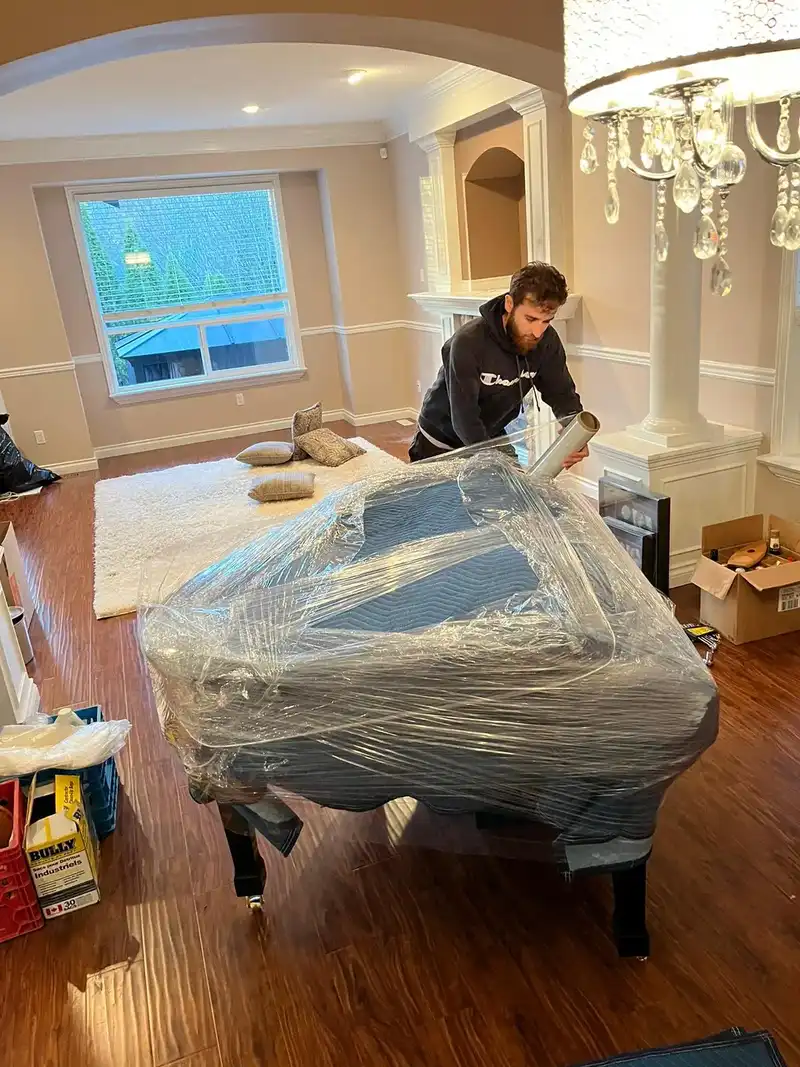
- Everything is wrapped and padded. Pads, shrink wrap and mattress bags on every move.
- Boxes are numbered. That makes it easy to match the inventory if CBP wants to see a specific item.
- Fragile items are packed for inspection. Pack them so a box can be opened and closed again safely.
- Big pieces come apart when needed. We label the hardware in Surrey and rebuild everything in Seattle.
Our furniture movers Surrey page explains how we handle large pieces. For full packing, which also makes a clean inventory easier, see our full service movers Surrey page.
Apartment Movers Surrey to Seattle
Many people moving for work go into Seattle apartments in neighbourhoods like Capitol Hill, South Lake Union, Ballard or Fremont, or across the lake in Bellevue, Kirkland and Redmond. For apartment movers Surrey to Seattle:
- Book the Seattle elevator with a wide window. Border waits are hard to predict.
- Ask about street parking. Seattle has rules for reserving curb space for a moving truck. Check with your building and the city in advance.
- Watch for steep streets. Queen Anne and parts of Capitol Hill are very hilly. Tell us the address so we can plan where the truck can park safely.
- Send us the building’s move rules. Loading docks often have height limits and booking times.
Surrey to Seattle Moving Cost: What’s Different About Cross-Border Pricing
Your Surrey to Seattle moving cost depends on the same basics as any move, plus a few cross-border extras:
- How much you’re moving. This sets the truck size, crew and time.
- Customs brokerage and border fees. Some movers include these. Others bill them separately. Ask.
- Border time. Waiting at the crossing is real crew time.
- Access at both ends. Stairs, elevators, steep Seattle streets and parking rules.
- Packing. Full packing costs more but makes the inventory and inspection easier.
- Currency. Ask whether the quote is in Canadian or US dollars, and whether it includes taxes.
A clear Surrey to Seattle moving quote should show:
- The price and the currency.
- What’s included, especially customs brokerage.
- How border waiting time is charged.
- The loading date and delivery window.
- How your belongings are covered in the US.
List your items in our volume calculator, or send them through our moving quote Surrey page. A full list helps with both the quote and the customs inventory.
Want a written estimate? Call (778) 962-1619. Have these ready: both addresses, your move date, your home size, any stairs or elevators, and a rough list of large items.
Moving to Seattle: Settling In
Moving to Seattle from Surrey won’t feel like a huge climate change. It’s the same rainy Pacific Northwest. But there are some practical differences:
- Healthcare and insurance. The US system works very differently from BC’s. Sort out coverage through your employer or another plan before you go.
- Driver’s licence and car. Washington has deadlines for new residents to switch their licence and register their vehicle. Check the Washington State Department of Licensing.
- Banking and credit. Your Canadian credit history doesn’t automatically move with you. Some banks offer cross-border accounts that help at the start.
- Taxes. Moving countries affects your taxes in both. Talk to a cross-border tax professional.
- Measurements. US appliances, voltage and sizes are usually the same as in Canada, but some items may differ. Check before you buy new.
Seattle to Surrey Movers: Moving Back to Canada
We also work as Seattle to Surrey movers. The trip is the same in reverse, but the paperwork comes from the Canadian side.
- Canada Border Services Agency (CBSA). If you’re settling or returning to live in Canada, you’ll usually declare your goods on CBSA Form BSF186, often still called a B4.
- List goods to follow. If your belongings arrive after you, list them on the form when you first cross the border yourself. Leaving this step out can cause problems later.
- Same restrictions apply. Cannabis, firearms, some food, plants and large amounts of alcohol have rules on the way into Canada too.
When the truck arrives in Surrey, townhouse complexes can have tight roads and limited parking. Send us the complex name and unit number ahead of time. Once you’re settled, our residential movers Surrey page explains the other help we offer.
Mistakes That Hold Up Cross-Border Moves
- Booking a mover that can’t legally cross. Check that the company is authorized to carry household goods into the US.
- Leaving the inventory to the last day. A rushed list is the most common cause of delays at the border.
- Packing banned items. One cannabis product, firearm or plant can hold up the whole truck.
- Expecting the truck to use the Peace Arch. Trucks use the Pacific Highway crossing.
- Booking a tight elevator window in Seattle. Border waits are unpredictable.
- Forgetting the goods-to-follow list when moving to Canada. It must be done when you first enter.
- Assuming the quote includes customs fees. Ask, and get it in writing.
Pro Tips From Long Distance Movers Who Cross the Border
Our long distance movers have learned a few things about this route:
- Start the paperwork early. Two to four weeks ahead is a comfortable time to begin the inventory and forms.
- Keep copies of everything in your car. Passport, immigration papers, the inventory and the declaration forms.
- Photograph high-value items. Photos with dates help show that items are used and yours.
- Number every box. It makes inspection and unpacking faster.
- Cross yourself before the truck, if you can. Some people prefer to be in Seattle with the keys when the truck clears.
- Plan around border rush times. Weekday mornings and holiday weekends are often busier.
How We Handle a Surrey to Seattle Move
As a moving company Surrey to Seattle families plan around, here’s how we work on cross-border moves:
- Paperwork first. We walk you through the inventory and declarations before we book the truck.
- A written quote in a stated currency, showing what’s included and how border time is charged.
- A delivery window agreed in advance, with updates on the day.
- Careful packing that’s ready for inspection.
- Honest advice about what to leave behind.
As long distance movers Surrey to Seattle families book for cross-border moves, we also plan moves to cross border movers Lynden WA and cross border movers Ferndale WA, just south of the border. Starting elsewhere in the Lower Mainland? See our Vancouver to Seattle movers, Langley to Seattle movers and White Rock to Seattle movers pages. All routes are listed on our long distance movers Surrey BC page.
Conclusion: Making Surrey to Seattle Moving Simple
Surrey to Seattle moving is a short drive with one big step in the middle: the border. Choose a mover that’s authorized to cross. Start your inventory and paperwork early. Leave restricted items behind, and give yourself a flexible delivery window. Do those things, and the border becomes just another stop.
The right Surrey to Seattle movers will explain every step before moving day. If you’re moving between Surrey and Seattle in either direction, tell us your date, both addresses and what’s coming. We’ll walk you through the paperwork and send a written estimate.
Talk to our team: call (778) 962-1619 or request a quote through Book A Move.
Frequently Asked Questions About Moving From Surrey to Seattle
1. How long does a move from Surrey to Seattle take?
The drive is about 2.5 to 3 hours in normal traffic, plus time at the border. Crossing can take anywhere from 30 minutes to several hours, depending on waits and whether CBP inspects the truck.
Small homes can often be loaded and delivered on the same day. Larger homes, or busy border days, usually mean next-day delivery. The paperwork should start two to four weeks before moving day.
2. How much does it cost to move from Surrey to Seattle?
It depends on how much you’re moving, access at both homes, packing, border time and customs brokerage. Some movers include brokerage. Others bill it separately.
Always ask which currency the quote is in and what it includes. Send us your inventory, and we’ll give you a written quote that spells out every cost.
3. What paperwork do I need to move my household goods to the US?
Usually your passport and immigration documents, CBP Form 3299, a detailed inventory, and proof that you’re setting up a home in the US, such as a lease or job letter. Used household goods you’ve owned for at least a year can generally enter duty-free.
Requirements can change, so check with CBP and your mover before moving day. Start the inventory early, because it’s the step that most often causes delays.
4. Can a moving truck use the Peace Arch crossing?
No. Commercial vehicles, including moving trucks, aren’t allowed at the Peace Arch crossing. They use the Pacific Highway crossing, about 1.6 km east on Highway 15 (176 Street) in Surrey.
If you’re driving your own car, you can still use the Peace Arch. Many people cross separately from the truck and meet it in Seattle.
5. Can you move me from Seattle back to Surrey?
Yes. The truck drives to Seattle, our crew loads your home, and we bring it back across the border to Surrey.
For the Canadian side, you’ll usually declare your goods on CBSA Form BSF186 (often still called a B4). If your belongings arrive after you, list them as goods to follow when you first cross the border yourself. Leaving that step out can cause problems later, so plan it before moving day.