

Rain on moving day is not bad luck in Surrey. It is the normal forecast for half the year. Even after you book residential movers Surrey families trust, one worry stays. Will your sofa, mattress and hardwood floors survive a wet November morning?
The short answer is yes, with the right plan. We have watched crews load full four-bedroom homes in steady downpours without one damp box. The difference comes from preparation, not luck. Good home movers Surrey residents hire treat rain as a normal working condition, not an emergency.
This guide explains exactly how moving in the rain works when professionals handle it. You will learn what gets damaged, how crews prevent it, and what you can do at home before the truck arrives.
We also cover the mistakes we see every wet season. These details help you judge which packers and movers Surrey homeowners can actually rely on when the sky turns grey.
Finally, you will know which questions to ask when you request a free moving estimate Surrey companies offer. A few smart questions at that stage save a lot of stress later.
Surrey sits in the Lower Mainland, where Pacific storms roll in from October through April. November is often the wettest month of the year. Atmospheric rivers can drop heavy rain for days, as many residents remember from the floods of November 2021.
Most people cannot shift their move to July. Leases end on the first of the month. Home sales close on fixed dates. School terms and new jobs do not wait for sunshine. So moving during rainy season BC is less a choice and more a reality for thousands of households each year.
Rain here also tends to be steady rather than short. A Fleetwood move might face light drizzle all day. A South Surrey move might get a sudden heavy burst at noon. Skilled crews plan for both patterns.
Experienced house movers know water damage rarely comes from one big soaking. It builds up from small exposures across dozens of trips between the door and the truck. These are the main risks we watch for.
A reliable moving company builds rain protection into every single step. It does not wait to react when the first drops fall. Here is how a well-run crew handles the job.
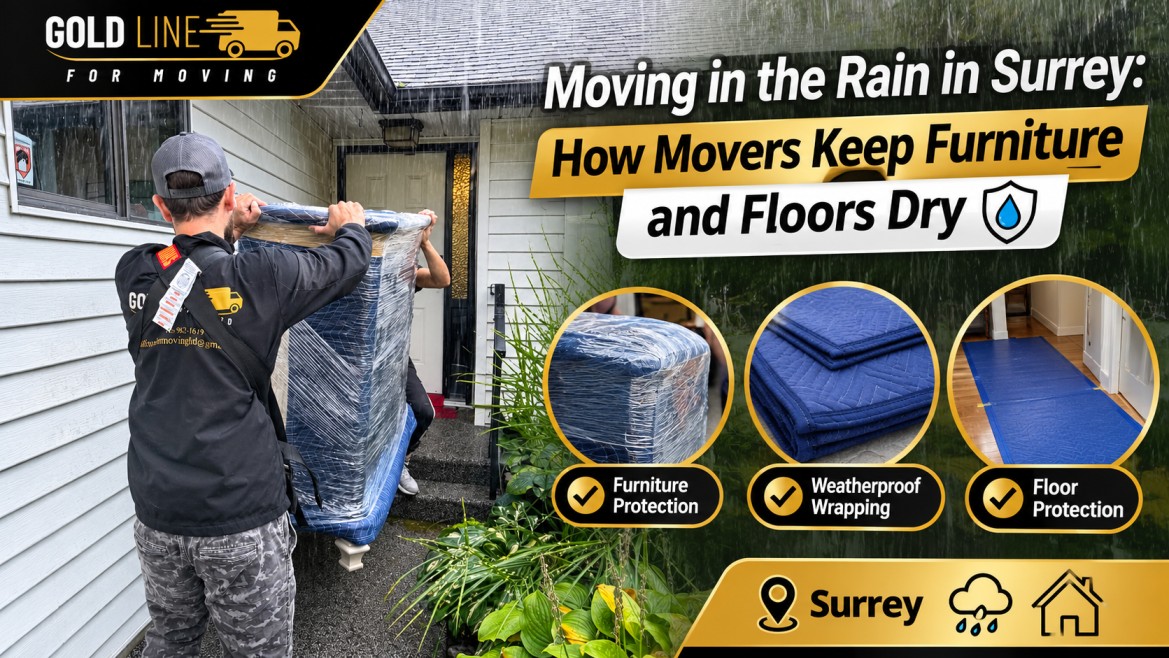
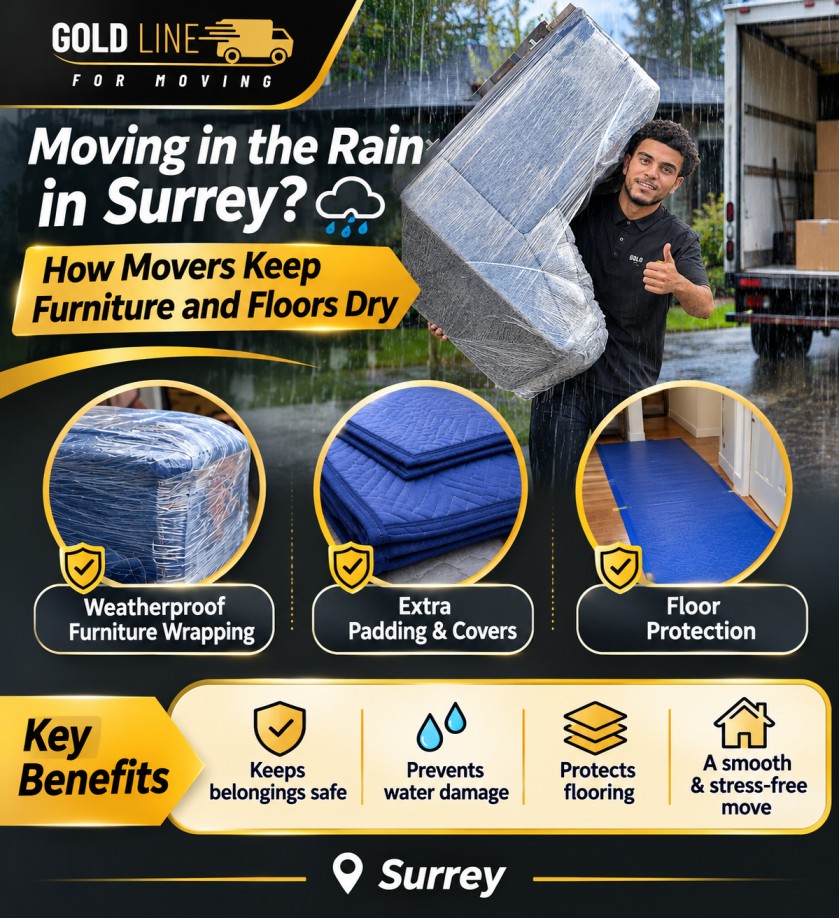
Crews wrap upholstered pieces in thick moving blankets, then add a layer of stretch plastic wrap over the top. The blanket protects against bumps. The plastic sheds water. Mattresses go into sealed plastic mattress bags before they leave the bedroom.
For wood furniture, the order matters. Crews place the blanket against the wood first. Plastic wrap directly on wood can trap moisture and leave marks, especially on older finishes.
The best crews cut the distance furniture travels in open rain. They back the truck as close to the door as the driveway allows. In townhouse complexes in Guildford or Newton, trucks often park further away. There, crews may set up a pop-up canopy or tarp between the door and the ramp.
Some crews also lay a rubber mat or tarp on the truck ramp. This keeps the ramp less slippery and stops dirty water from splashing onto wrapped items.
Smart loading keeps the most sensitive items deep inside the truck, away from the door. Mattresses, electronics and upholstered pieces go in first. Plastic bins, patio furniture and garden tools go near the back, where a little moisture does less harm.
Crews also keep the truck door partly closed between trips during heavy rain. This simple habit stops wind from blowing water inside.
At Gold Line For Moving, our crews carry extra blankets, stretch wrap, mattress bags and floor runners on every truck from October to April. We learned this from years of working as residential movers Surrey families call when the forecast looks grim. Running out of wrap halfway through a wet move is a mistake you only make once.
Floors often suffer more than furniture on a wet day. Good home moving services protect the floors at both properties, not just the one you are leaving.
Crews roll out heavy-duty floor runners from the front door along the main carrying path. Adhesive carpet film protects carpet on stairs and hallways. Large absorbent mats at each entry trap water before it reaches the house.
Crew members wipe their boots at every entry. Some switch to indoor shoe covers for long carries inside. Dollies and hand trucks get a quick towel wipe before they roll across finished floors.
Here is a real-world style example. Last winter, one of our crews moved a family from a Cloverdale rancher to a new Panorama Ridge home with fresh white oak floors. It rained for all seven hours. The crew laid runners before carrying a single box and changed the entry mats three times. At the end of the day, the owners found no scratches and no water marks.
These wet weather moving tips help you work with your crew, not against it. Most take less than an hour and make a real difference.
Full packing service adds another layer of protection. When packers and movers Surrey residents hire do the packing, they choose the right box strength and seal every seam properly.
Use this quick table to plan protection for your most common items.
| Item | Main Rain Risk | Best Protection |
|---|---|---|
| Mattress | Absorbs water, mould growth | Sealed plastic mattress bag |
| Sofa or armchair | Soaked fabric, musty smell | Moving blanket plus stretch wrap |
| Wood dresser or table | Swelling, water rings | Blanket first, plastic on top |
| Cardboard boxes | Collapse when wet | Plastic bins or double tape and plastic cover |
| TV and electronics | Moisture and condensation | Original box or padded carton, loaded deep in truck |
| Floors | Scratches, mud, slips | Runners, entry mats, wiped dolly wheels |
Some problems come from habits, not weather. These are the mistakes we see most often.
One common misconception is that plastic wrap alone is enough. It is not. Plastic without padding offers no protection from bumps, and on wood it can trap moisture against the finish.
Experienced home movers Surrey families recommend often share the same small habits. These pro tips come from many wet moves across the city.
Here in the Lower Mainland, moving in the rain is simply part of life. You cannot control the weather, but you can control the preparation.
The right residential movers Surrey homeowners hire will wrap furniture in layers, build a dry path to the truck and protect floors at both homes.
Choose home movers Surrey residents recommend for real wet-weather experience, not just low prices. Ask direct questions and watch for clear answers.
If packing feels like too much, packers and movers Surrey families use can handle it with stronger materials and better sealing.
When you are ready to plan, Gold Line For Moving can walk you through a rain-ready moving plan. Request a free moving estimate Surrey residents can count on, and move with confidence, whatever the forecast says.
Yes, most professional crews in Surrey work through rain because it is so common here. They bring blankets, stretch wrap, mattress bags, floor runners and tarps as standard gear. The only time a crew should pause is during unsafe conditions, such as flooding, high winds or icy ramps. A good crew will talk with you openly if the weather becomes truly dangerous rather than pushing ahead and risking injury or damage.
Start with padding, then add plastic. Wrap each piece in a moving blanket or thick old duvet, then cover it with stretch wrap or a heavy plastic sheet. Never put plastic straight onto wood, because it can trap moisture and mark the finish. Keep your carrying path short, park as close to the door as possible, and load soft items like mattresses deep inside the vehicle, away from the open door.
Rain can add some time, usually because crews wrap items more carefully and change entry mats more often. For an average home, that might mean an extra 30 to 60 minutes, depending on parking distance and how much is pre-packed. You can reduce this by packing fully before the crew arrives, using plastic bins and reserving close parking. Ask your mover during the estimate how they handle rain and whether they bill hourly.
Act quickly. Unwrap the item, wipe off surface water with a dry towel and let it air out in a warm, ventilated room. For upholstery and mattresses, use a fan and avoid direct high heat, which can shrink fabric. For wood, dry it gently and check for swelling over the next day. Take photos straight away and tell your moving company, since many movers offer valuation coverage for damage during the move.
It depends on the warning level and your local roads. Normal heavy rain is manageable for an experienced crew. However, an atmospheric river can cause flooding, road closures and power outages, especially in low-lying areas. Check Environment Canada alerts and DriveBC road reports a few days before your move. Talk with your mover early about backup dates, and confirm your lease or closing terms allow some flexibility if conditions turn unsafe.
Gold Line For Moving is a reputable moving business with a track record of providing customers with the best relocation services at the most reasonable prices. Customers receive prompt, dependable, and effective services from a qualified workforce.