

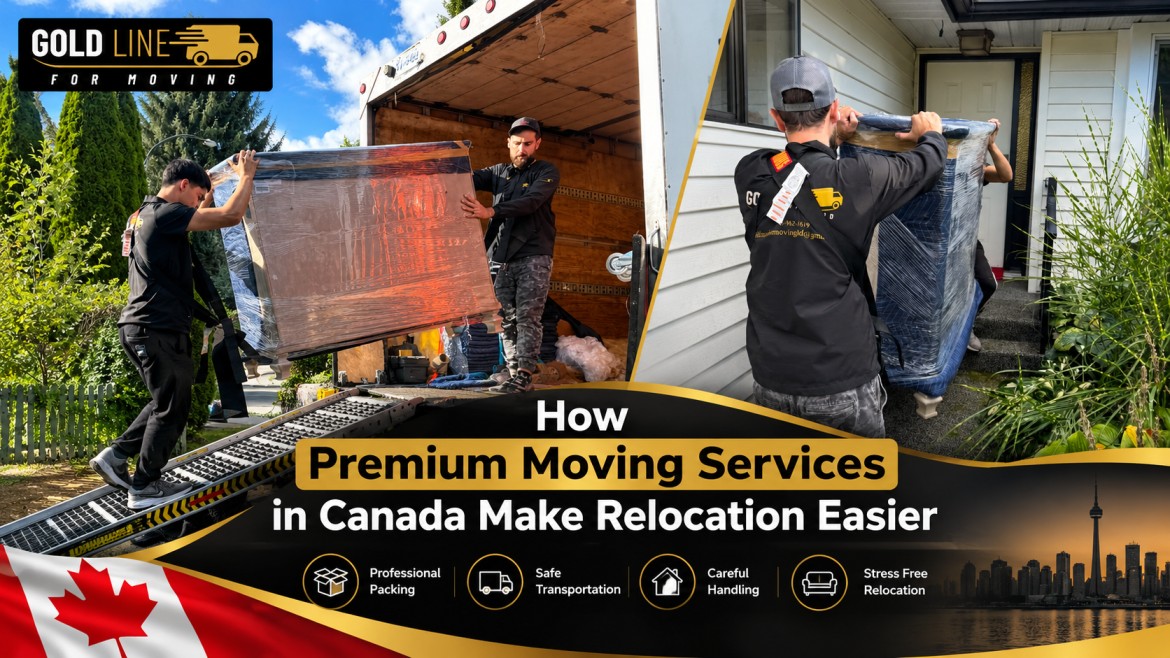
Relocating to a new home can be exciting, but the process often becomes complicated when valuable furniture, fragile belongings, tight schedules, and long travel distances are involved. A move may require much more than loading boxes into a truck. It can involve coordinating building access, protecting expensive items, arranging temporary storage, and making sure everything arrives safely at the new property.
This is where Premium Moving Services in Canada can make a meaningful difference. Rather than treating relocation as a simple transportation task, premium moving focuses on careful planning, personalised handling, clear communication, and services tailored to the household’s needs.
Luxury Moving Services in Canada can be particularly useful for families moving between large homes, professionals relocating for work, homeowners with valuable furnishings, and people who want to reduce the physical and organisational demands of moving.
However, premium service does not automatically mean that every option is necessary or that damage is impossible. The real value comes from choosing the right level of support, understanding what the quotation includes, and working with a moving company that explains its process clearly.
This guide explains how premium relocation works, which services are worth considering, how to compare providers, and what you can do before moving day to make your relocation more predictable.
Standard moving services generally focus on transporting household belongings from one address to another. Premium moving adds a more coordinated approach, with greater attention to preparation, protection, communication, and individual requirements.
For example, a household moving from a condominium in Vancouver to a detached home in another province may need building reservations, a detailed inventory, protective wrapping for furniture, and coordination between collection and delivery dates. A premium service can bring these tasks together under one moving plan.
The exact package varies between companies, so it is important to confirm what is actually included.
Common features may include:
The distinction is not simply the appearance of the moving truck or the number of staff assigned. It is how carefully the company plans the work, communicates responsibilities, and manages the practical details.
A well-managed move reduces the number of decisions you must make at the last minute. Instead of organising every task independently, you can work from a plan that identifies responsibilities, deadlines, and potential obstacles.
A useful moving plan begins with understanding the property, the volume of belongings, and the customer’s priorities.
A family with two children, for example, may need bedrooms assembled first so the children can settle in quickly. Someone moving into a high-rise condominium may need to reserve a service elevator and confirm permitted loading hours. A homeowner with a large dining table may need to establish whether it can pass through narrow doorways without being dismantled.
A pre-move assessment helps identify these requirements before the crew arrives.
Ask your moving coordinator to document:
These details help prevent avoidable delays and make the quotation more meaningful.
Moving often involves several people and organisations, including landlords, property managers, building staff, cleaners, and utility providers.
If your previous home must be vacated by noon but access to the new property is unavailable until late afternoon, the gap can create a logistical problem. You may need temporary storage or a revised delivery arrangement.
A premium moving coordinator can help identify scheduling conflicts early and discuss available solutions.
For long-distance relocations, ask whether the delivery date is guaranteed or estimated, how delays are communicated, and whether the company offers direct transportation or shared-load arrangements. These distinctions can affect timing, flexibility, and cost.
Packing an entire household while managing work, family commitments, and property handovers can quickly become overwhelming.
Professional planning reduces the number of tasks that must be handled at once. You can agree on packing dates, decide which rooms require priority, and identify items that should remain accessible during the move.
The goal is not to eliminate every decision. It is to make important decisions before they become urgent.
The value of a premium move depends on the household, the distance, the belongings involved, and the amount of time available.
For a small apartment move with few possessions, a basic service may be perfectly adequate. For a large household with delicate furnishings, valuable artwork, or several storage requirements, additional coordination can provide greater practical value.
Expensive furniture, glass cabinets, framed artwork, antiques, and delicate decorative pieces often require more attention than ordinary cartons.
Before the move, identify these items and explain their requirements to the moving company. Ask what packing materials and handling methods will be used and whether any items need a specialist.
Do not assume that every premium package automatically includes custom crating, specialist art handling, or additional insurance coverage.
A household may choose professional packing because work commitments leave little time for preparation. Another family may want unpacking assistance so the kitchen and bedrooms are usable soon after arrival.
These are different needs, and the service should reflect them.
For instance, a professional relocating to Toronto for a new role might prioritise a reliable delivery window and quick bedroom setup. A family moving from Surrey to a larger home might prioritise careful packing, children’s essentials, and furniture placement.
A good provider listens to these priorities rather than offering the same package to every customer.
Packing is often one of the most time-consuming parts of relocation. It involves more than placing objects into boxes. Each item needs suitable packaging, sensible grouping, and clear labelling so it can be handled and unpacked correctly.
Packing and unpacking services in Canada can help households that have limited preparation time or belongings requiring consistent, organised handling.
Depending on the agreed package, professional packing may involve:
For example, a home office may contain a monitor, computer accessories, cables, documents, and small equipment. Labelling everything simply as “office” may be insufficient if you need to resume working quickly. A more useful system identifies essential equipment and separates it from items that can be unpacked later.
Before packing begins, remove personal documents, passports, medication, jewellery, and other essentials you prefer to transport yourself.
Unpacking can be especially useful when a household needs to become functional quickly. However, clarify what the service covers.
Some packages may include opening boxes and placing items on accessible surfaces, while others may include more extensive organisation. Removing packaging materials may also be a separate service.
Ask whether the crew will assemble agreed furniture, arrange kitchen items, remove empty cartons, and take away packing waste. Confirm any limitations in writing.
Furniture can be damaged during lifting, carrying, loading, transit, or unloading. Scratches and dents often occur when a large item passes through a narrow hallway or comes into contact with an unprotected surface.
Furniture protection moving procedures help reduce these risks, although no method can guarantee that damage will never occur.
A suitable protection plan may include:
Different materials require different care. A polished wood table, upholstered sofa, leather chair, and glass cabinet should not necessarily receive identical treatment.
If you own antique furniture or high-value pieces, provide photographs and measurements before moving day. Ask whether specialist handling or custom crating is appropriate.
Also check how the company handles existing damage, packing exclusions, and claims. Photographs taken before collection can help establish the condition of your belongings.
Long-distance moving introduces additional challenges. The route may cross several provinces, weather conditions can change, and delivery schedules may depend on road access, driver hours, and other operational factors.
When comparing high-end movers in Canada, look beyond polished marketing and focus on the practical details of the service.
A detailed estimate should explain the services being purchased and identify circumstances that could change the final price.
Depending on the move, charges may relate to labour, transportation, packing materials, storage, stairs, long carries, special handling, or additional stops.
Ask these questions before accepting a quotation:
Do not compare quotations solely by the total price. One estimate may include packing materials and furniture assembly, while another may cover transportation only.
Confirm the legal identity of the moving business and check applicable provincial requirements. For interstate or interprovincial transportation, ask which carrier will perform the work and who is responsible for the shipment.
Review the company’s written terms, complaints process, and available insurance or valuation options. Verify any licences or registrations that apply to the particular route and type of service.
A professional company should be willing to answer reasonable questions without pressuring you into making an immediate decision.
The right company is not necessarily the one with the most expensive package. It is the one whose service matches your requirements and whose terms you understand.
Use the following checklist when comparing providers.
| What to compare | What to look for |
|---|---|
| Planning | A clear inventory, schedule, and access assessment |
| Packing | Defined responsibilities and suitable protective materials |
| Pricing | Written inclusions, exclusions, and potential extra charges |
| Communication | A named contact and a process for reporting delays |
| Protection | Documented handling procedures and condition records |
| Coverage | Clear explanation of liability, valuation, and claims |
| Storage | Written rates, access rules, and handling arrangements |
| Reviews | Specific, credible feedback about similar moves |
Customer reviews can be helpful when they describe concrete experiences, such as how a company handled a delayed delivery or protected delicate furniture. Look for patterns across multiple reviews rather than relying on one highly positive or negative comment.
When evaluating premium movers in Canada, ask for clarification wherever the quotation uses vague phrases such as “full service” or “complete protection.”
Local moves still require careful planning. In Surrey, British Columbia, a household might move from a condominium to a detached property, relocate between neighbourhoods, or transfer belongings into temporary storage during renovations.
The distance may be short, but building rules, parking, narrow access points, and busy collection times can complicate the process.
When comparing movers in Surrey, confirm whether the team has assessed both addresses and whether the moving plan accounts for loading access, stairs, elevator reservations, and the size of larger furniture.
For example, if a condominium allows moving only during a reserved time slot, arriving without the correct booking can disrupt the schedule. Similarly, a large sofa may need to be measured before moving day to determine whether it will fit through a stairwell or doorway.
Local experience can be useful, but ask practical questions instead of assuming that a company knows every building’s requirements.

A stress-free moving experience does not depend entirely on the moving company. Your own preparation also influences how smoothly the day goes.
Separate belongings into three groups:
Keep essential belongings with you rather than placing them in the main shipment.
Take clear photographs of fragile, valuable, or easily scratched possessions before packing. Include close-up images of existing marks and keep any relevant purchase records or appraisals.
This documentation does not guarantee compensation, but it can help clarify the condition of an item if a dispute arises.
Check parking arrangements, loading restrictions, elevator bookings, keys, entry codes, and the availability of someone to receive the delivery.
If the new property is undergoing renovation, confirm that the rooms and pathways are ready for furniture placement. Dust, wet floors, unfinished work, and blocked entrances can create avoidable problems.
Confirm the collection window, contact person, payment arrangements, and process for reporting a delay. Notify the moving coordinator promptly if the inventory, address, or access conditions change.
A short confirmation before moving day can prevent misunderstandings about responsibilities.
Even a carefully organised move can become difficult if key details are overlooked.
A low quotation may exclude packing, difficult access, storage, or specialist handling. Ask for a like-for-like comparison before deciding.
Moving contracts can contain exclusions or special conditions for certain belongings. Read the terms carefully and disclose valuable, fragile, or unusual items in advance.
Late packing can result in poorly labelled boxes, unsecured items, and forgotten essentials. Set a packing deadline and leave enough time for a final inventory check.
A collection date does not always mean that the shipment will arrive at the destination on the same day. For longer routes, confirm the expected delivery window and the procedure for schedule changes.
Condominiums, apartment buildings, and managed properties may have restrictions on moving hours, elevator use, parking, and access. Confirm these details with the property manager before the crew arrives.
A few targeted questions can reveal more about a moving company’s approach than a general promise of excellent service.
Ask who will manage your move. Find out whether you will have a dedicated coordinator, how to contact them, and who will make decisions if the original plan changes.
Ask how exceptions are handled. If a table does not fit through the entrance or the property is not ready, you need to understand the available alternatives and their costs.
Ask about subcontracting. Confirm whether the company will use its own employees, subcontractors, or another carrier. Ask who remains responsible for communication and claims.
Clarify coverage before signing. Understand the difference between a company’s liability, any valuation arrangement, and separate insurance. Do not assume that the declared value of an item automatically determines compensation.
Keep a copy of the agreement. Store the estimate, inventory, payment records, photographs, and written correspondence in one accessible place.
These steps are useful whether you are moving locally or across Canada. They help you evaluate the service on evidence rather than promises.
When researching a premium moving company in Canada, consider how well each provider explains its process, handles individual requirements, and communicates costs. Gold Line For Moving is a name you may consider when researching moving options, but evaluate its current services, coverage, written terms, and customer feedback directly before making a decision.
The most suitable moving arrangement should reflect the actual size of your household, the value and type of your belongings, your timeline, and the support you need. A detailed quotation and clear answers are more useful than selecting a package simply because it is described as premium.
Relocation becomes more manageable when planning, packing, transportation, and delivery are treated as connected parts of one process. Premium Moving Services in Canada can reduce the pressure on households by coordinating these tasks and providing additional support where it is genuinely needed.
From packing and unpacking services Canada to specialist furniture protection and long-distance scheduling, the right combination of services can help protect belongings and make settling into a new property easier.
Before booking, compare written estimates, clarify responsibilities, review coverage, and discuss any special handling requirements. If you are considering Gold Line For Moving, use the same careful evaluation process to determine whether its available services match your relocation needs.
A successful move is not simply about getting everything from one address to another. It is about knowing what will happen, understanding the costs, and having a practical plan when circumstances change.
The main benefits can include organised planning, professional packing, protective handling, scheduling support, and optional unpacking or storage. These services are particularly useful for large households, long-distance moves, busy professionals, and people with fragile or valuable belongings. The actual benefits depend on the written package, so confirm which tasks are included before booking.
The cost depends on the size of the shipment, distance, packing requirements, access conditions, storage needs, and any specialist handling. A small local move with limited packing may cost substantially less than a fully packed interprovincial relocation. Request a written estimate based on an accurate inventory and ask which circumstances could increase the final price. Comparing itemised quotations is more reliable than choosing the lowest headline figure.
Start researching providers as soon as your likely moving dates are known. Booking early can provide more choice, especially during busy moving periods, but availability varies by route and company. Before confirming, establish the collection window, estimated delivery date, cancellation terms, and arrangements if your property handover changes. Avoid treating an estimated arrival date as guaranteed unless the agreement clearly says so.
Antiques, polished wood furniture, glass cabinets, mirrors, artwork, delicate electronics, and items with unusual shapes may require additional preparation. Tell the moving company about these items before the assessment, and provide photographs or measurements when useful. Ask how each item will be packed, secured, and documented. For particularly valuable pieces, confirm whether specialist handling or custom crating is available and whether the company’s coverage applies.
Start by checking the company’s identity, applicable credentials, recent customer feedback, written estimate, and service terms. Ask who will transport your belongings, whether subcontractors are involved, how delays are communicated, and how damage claims are handled. Confirm building access and any additional charges before signing. A reliable provider should explain the process clearly and give you enough information to make an informed decision without pressure.
Gold Line For Moving is a reputable moving business with a track record of providing customers with the best relocation services at the most reasonable prices. Customers receive prompt, dependable, and effective services from a qualified workforce.